INTRODUCTION
“Be diligent to present yourself approved to God, a worker who does not need to be ashamed, rightly dividing the word of truth.” (2 Timothy 2:15)
People around the world use their time and money to read all types of self-help books on how to succeed and how to feel good physically and emotionally, but many never study the most important book ever written: the Bible.
What is the Bible?
The word “Bible” comes from the Greek word biblos which means “roll of papyrus paper.” The Bible is a set of 66 books that contains the Word of God, revealing His dealings with humanity. Humanity cannot know God on its own. God must reveal Himself to people’s hearts through His Word.
It was written over a period of approximately one thousand years, and its message was inspired by the Holy Spirit. The author of the Bible is God, even though He used common men such as pastors, scribes, prophets, fishermen, and even a doctor.
God’s Word is perfect in its exactness, secure in its trustworthiness, and complete in its content.
It is important to note that:
“All Scripture is given by inspiration of God, and is profitable for doctrine, for reproof, for correction, for instruction in righteousness, that the man of God may be complete, thoroughly equipped for every good work.” (2 Timothy 3:16-17)
In AMP:
“All Scripture is God-breathed [given by divine inspiration] and is profitable for instruction, for conviction [of sin], for correction [of error and restoration to obedience], for training in righteousness [learning to live in conformity to God’s will, both publicly and privately—behaving honourably with personal integrity and moral courage]; so that the man of God may be complete and proficient, outfitted and thoroughly equipped for every good work.”
What does the Bible teach?
The Bible teaches about the relationship between God and humanity throughout the history of mankind. It begins in Genesis with the creation of the universe and of human beings; then it teaches about the fall of humanity and its consequences. The rest of the Bible shows God’s plan to restore humanity to a relationship that is better than the one it had before its fall and of its glorious future with the heavenly Father; this only if it accepts Jesus, His only Son, who was born and lived without sin and who died on the cross to pay the wages of sins committed by the human race.
He was raised on the third day and ascended to heaven where He now rules at the right hand of the Father. This is the most important truth revealed by the Bible.
How do we study the Bible?
Here are a few suggestions on how to study God’s Word. For example:
- Use part of your time in prayer. A good goal is to read five chapters per day.
- Study it systematically. Don’t do it randomly. Read each book completely, not just a verse here and there.
- Begin by reading the New Testament (NT). It is the covenant we live by today and the one that will help us to understand the Old Testament (OT). Studying only the OT can lead to legalism because it doesn’t contain the complete message, we receive by also reading the NT.
- Pray for revelation. We must ask the Holy Spirit to enlighten our mind to understand the Word and receive the revelation of His mysteries. The Apostle Paul prayed like this for the Christians in Ephesus. Do not cease to give thanks for you, making mention of you in my prayers: that the God of our Lord Jesus Christ, the Father of glory, may give to you the spirit of wisdom and revelation in the knowledge of Him, the eyes of your understanding being enlightened. —Ephesians 1:16-18
- Ask the Holy Spirit for help because He guides us to all truth.
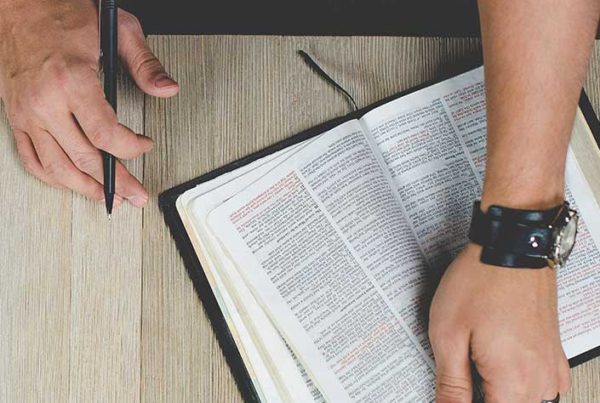
- Have paper and pencil ready. When you receive a revelation from God, you should be ready to take notes.
- Use a concordance. It is useful for intensive study. In it you will find words and subjects in alphabetical order and the verses where these can be found. This will help you to discover what the Bible teaches on money, sadness, joy, faith, children, marriage, and many other subjects.
- Start today. Begin to study the Bible right now. At the beginning of each New Year, we set new resolutions and goals, so why not purpose to study God’s Word this year?
What is biblical meditation?
These verses in Psalm 77 probably give us the clearest idea of biblical meditation:
“I will remember the works of the Lord; Surely, I will remember Your wonders of old. I will also meditate on all Your work and talk of Your deeds. Your way, O God, is in the sanctuary; Who is so great a God as our God? You are the God who does wonders; You have declared Your strength among the peoples. You have with Your arm redeemed Your people, the sons of Jacob and Joseph. Selah” (Psalm 77:11-15)
Not only is biblical meditation about focusing on God through contemplation on his Word, but it’s also about quieting our hearts with Scripture and a deeper intimacy with Jesus.
The particulars of biblical meditation can vary, but the practice isn’t complicated. A meditative practice that helps me is sitting quietly and thinking over a passage piece by piece, breaking it apart and dwelling on each word and line of Scripture.
- If you’ve ever sat with a Scripture and gone over it repeatedly, trying to understand each word, you’ve meditated.
- If you’ve ever been compelled by a sermon or passage of Scripture to sit and think over a single attribute or testimony of God, you’ve meditated.
- If you’ve ever felt bringing a Scripture to mind, going over it repeatedly to gain God’s strength and rest, you’ve meditated.
Meditation implies wonder and thought, remembering the Lord in all his glory, and pondering him in his fullness.
Scriptures Reveal the Benefits of Biblical Meditation:
- Joshua 1:8 – it will make your way prosperous, and you will have good success.
- Psalm 1:2-3 – It will make you prosper
- Philippians 4:6-8 – The peace of God which surpasses understanding will guide your heart and mind through Christ Jesus.
Here are five steps to help you learn how to meditate on the Word of God.
- Set yourself before the Lord.
When you set yourself before the Lord, you are submitting to His Word, His instruction, and His authority. You are inviting Him to minister to your heart. To help prepare your heart for what He wants to speak to you, try spending some time quietly praying in the spirit. Acknowledge the integrity of His Word and be open to whatever He wants to reveal to you.
- Forgive.
Unforgiveness, strife, bitterness and anger will block so many things in your life—your blessings, your peace, and your ability to hear from the Lord. To meditate on the Word and to receive from it, you must first forgive. Part of that means obeying God’s command to put away anger.
- Dwell on the Word of God.
Scriptural meditation simply means thinking about and reflecting on the Word of God. It means pondering a particular scripture and mentally applying it to your own circumstances again and again until that scripture permanently marks your consciousness. Don’t just read a verse. No, stop and camp there for a while. Dissect it. Let the Holy Spirit give you revelation about that verse. Let it convict you, sharpen you, refine you and encourage you. Don’t just read it and walk away. Let it change you.
That kind of meditation can affect your life in a way that almost nothing else can. It can, quite literally, alter your mind and renew it to the truth of God’s Word. Read Romans 12:2.
- Apply the Word personally.
When you need healing, for example, take the time to think again and again on the Word. You will begin to paint a profile of yourself in your spirit that lines up with the Word of God. Then, instead of wondering what you’re going to do when you need healing, your spirit already knows you have it, so you’ll begin to act on it. You’ll receive it.
To meditate on the Word means you make it your first source, your first line of defence, and the final word on any matter you’re facing.
- Let the Word mould and reform your thoughts.
This is what meditation is all about—taking time to envision the promise of God until it becomes a reality inside you. It’s tremendously powerful, and by focusing on the scriptural promises God has given you, you can put it to work in your life. As you meditate, you will renew your mind to the truth in His Word. It will change you and refine you and the way you respond to situations.
When you let the Word mould and reform your thoughts, you’ll know what to do in any situation. You’ll deal wisely in the affairs of life and adopt courage and strength. You’ll have the confidence to do whatever the Word says, no matter what anyone else thinks.
How can meditating on the Word of God change your life?
“If you abide in Me, and My words abide in you, you will ask what you desire, and it shall be done for you.” (John 15:7)
Meditating on the Word will prosper you and keep you safe in the will of God.
Real faith is built on the Word. We should meditate on the Word: Dig deeply into it and feed on it. Then, the Word will become a part of us just as natural food becomes a part of our physical bodies when we eat. We must feed upon the Word until acting on the Word is all we want to do.
Don’t just read the Word. Use these steps to meditate on it today.
Benefits of Studying the Bible
Studying the Bible brings many benefits to our lives. They include:
- Cleansing us to live in holiness (2 Corinthians 7:1)
- Wisdom to deal with different situations (Psalm 119:100)
- Clarity to walk in righteousness before God (Psalm 119:105)
- Healing to our bodies (Proverbs 4:22)
- Teaches us how to prosper (Joshua 1:8)
- Teaches us how to have an intimate relationship with God (Isaiah 66:2).
Begin to seek God in His Word today!