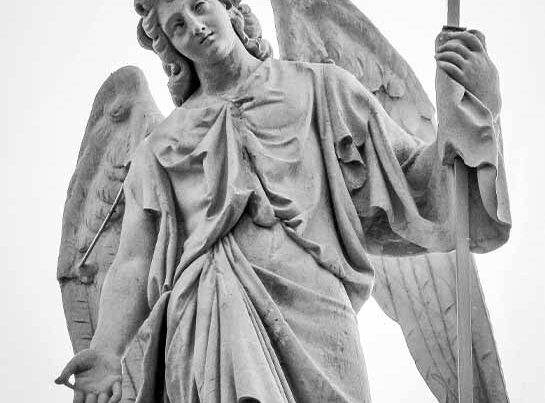
“And without controversy great is the mystery of godliness: God was manifest in the flesh, justified in the Spirit, seen of angels, preached unto the Gentiles, believed on in the world, received up into glory.” (1 Timothy 3:16)
INTRODUCTION
The Epistles are letters written by early Church leaders under the inspiration of the Holy Spirit and are preserved as part of the New Testament. They extend from the book of Romans through Jude. Thirteen were written by the Apostle Paul and are known as the “Pauline Epistles.” The remainder are called “General Epistles”. Their authors are James, Peter, John, and Jude. The author of Hebrews is unknown, but many theologians credit it to Paul.
There is one reference in the Epistles that confirms that the evil angels will be judged (2 Peter 2:4; Jude 6). This chapter focuses on the remaining references in the Epistles which pertain to the good angels of God.
THE REVELATION OF THE EPISTLES
The Epistles reveal that…
- Angels were created by God.
“For by Him all things were created that are in heaven and that are on earth, visible and invisible, whether thrones or dominions or principalities or powers. All things were created through Him and for Him. And He is before all things, and in Him all things consist.” (Colossians 1:16-17)
- Angels can be impersonated by Satan.
“And no wonder! For Satan himself transforms himself into an angel of light.” (2 Corinthians 11:14)
- Angelic messages must be in harmony with the Gospel.
“But even if we, or an angel from heaven, preach any other gospel to you than what we have preached to you, let him be accursed.” (Galatians 1:8)
- Angels transmitted the Old Testament law.
“Who have received the law by the direction of angels and have not kept it.” (Acts 7:53)
“For if the word spoken through angels proved steadfast, and every transgression and disobedience received a just reward, how shall we escape if we neglect so great a salvation, which at the first began to be spoken by the Lord, and was confirmed to us by those who heard Him, God also bearing witness both with signs and wonders, with various miracles, and gifts of the Holy Spirit, according to His own will?” (Hebrews 2:2-4)
“What purpose then does the law serve? It was added because of transgressions, till the Seed should come to whom the promise was made; and it was appointed through angels by the hand of a mediator.” (Galatians 3:19)
- Angels cannot separate you from God’s love.
“For I am persuaded that neither death nor life, nor angels nor principalities nor powers, nor things present nor things to come, nor height nor depth, nor any other created thing, shall be able to separate us from the love of God which is in Christ Jesus our Lord.” (Romans 8:38-39)
- Angels have a special language.
Paul speaks of the “tongues of angels” (1 Corinthians 13:1) and states that when he was caught up into heaven, he heard “inexpressible words”—assumed to be the language of angels (2 Corinthians 12:4).
- Angels observe Believers.
“As I see it, God has placed us apostles last in line, like people condemned to die. We have become a spectacle for people and angels to look at.” (1 Corinthians 4:9 GW)
- Angels are not to be worshipped.
“Let no one cheat you of your reward, taking delight in false humility and worship of angels, intruding into those things which he has not seen, vainly puffed up by his fleshly mind…” (Colossians 2:18)
- Angels verify the deity of Jesus Christ.
“And without controversy great is the mystery of godliness: God was manifested in the flesh, justified in the Spirit, seen by angels, preached among the Gentiles, believed on in the world, received up in glory.” (1 Timothy 3:16)
Angels saw Jesus manifested in the flesh.
- Angels are classified as either elect or fallen.
Elect are those who love and serve God. Fallen angels are those who joined in Satan’s rebellion.
“I charge you before God and the Lord Jesus Christ and the elect angels that you observe these things without prejudice, doing nothing with partiality.” (1 Timothy 5:21)
“For if God did not spare the angels who sinned, but cast them down to hell and delivered them into chains of darkness, to be reserved for judgment…” (2 Peter 2:4)
- Angels desire to look into the things that pertain to salvation.
“To them it was revealed that, not to themselves, but to us they were ministering the things which now have been reported to you through those who have preached the gospel to you by the Holy Spirit sent from heaven—things which angels desire to look into.” (1 Peter 1:12)
- Angels can appear unrecognized.
“Be not forgetful to entertain strangers: for thereby some have entertained angels unawares.” (Hebrews 13:2)
- Angels will be judged by Believers.
“Do you not know also that we [Christians] are to judge the [very] angels and pronounce opinion between right and wrong [for them]? How much more then [as to] matters pertaining to this world and of this life only!” (1 Corinthians 6:3 AMPC)
- Angels do not exceed their authority.
“Now if [all these things are true, then be sure] the Lord knows how to rescue the godly out of temptations and trials, and how to keep the ungodly under chastisement until the day of judgment and doom, and particularly those who walk after the flesh and indulge in the lust of polluting passion and scorn and despise authority. Presumptuous [and] daring [self-willed and self-loving creatures]! They scoff at and revile dignitaries (glorious ones) without trembling, whereas [even] angels, though superior in might and power, do not bring a defaming charge against them before the Lord.” (2 Peter 2:9-11 AMPC)
To be continued…